
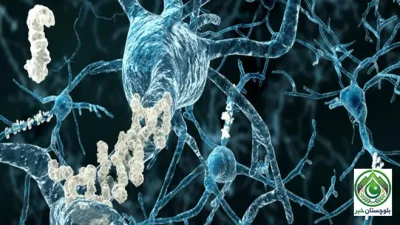
New York (Health Desk) A new study published in Nature Neuroscience has revealed a previously unclear role of dopamine in memory impairment associated with Alzheimer’s disease.
According to the research, memory is the process of linking different experiences together, such as associating a smell with a place or a sound with an event. This process depends on a key area of the brain called the medial temporal lobe, which is also considered the central hub of memory. However, the exact mechanism of how this system is disrupted in Alzheimer’s disease has not been fully understood until now.
A research team led by Associate Professor Keiichiro Agrawashi from the University of California, Irvine School of Medicine focused on the entorhinal cortex, a crucial region for memory that serves as the main pathway for transmitting information to the hippocampus.
Previous studies had already established that dopamine plays an essential role in memory formation in this brain region.
In the new study, scientists investigated whether dysfunction in the dopamine system contributes to memory decline in Alzheimer’s disease. Experiments conducted on mice showed that dopamine levels in the entorhinal cortex had dropped to less than one-fifth of normal levels, resulting in brain cells failing to properly respond to stimuli that would normally be learned and stored.